

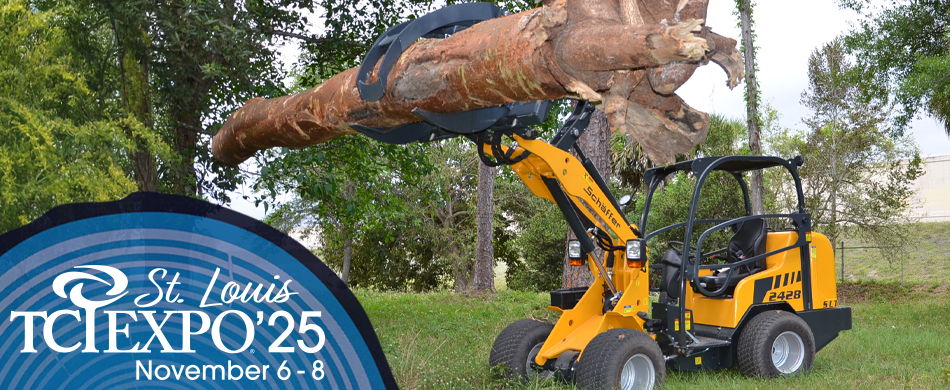
How to Evaluate Tree Care Equipment Like a Pro at TCI EXPO ’25
TCI EXPO ’25 arrives in St. Louis this November 6-8, bringing together arborists, climbers, tree experts, and business owners eager to explore cutting-edge solutions for their operations. With hundreds of exhibitors presenting everything from climbing gear to powerful machinery, the show floor can feel overwhelming—especially when you’re trying to make intelligent investment decisions for your bottom line.
Whether you’re in the market for compact wheel loaders—like the Schäffer lineup that DFD Loaders will be displaying at Booth #2029—or examining other equipment, knowing what questions to ask and what factors to consider can mean the difference between a wise purchase and a costly mistake.
Use this guide to help you evaluate equipment with confidence at TCI EXPO ’25.
What Questions Should You Ask About Service and Parts Availability?
Equipment downtime costs you money—and can drain profits faster than almost any other operational challenge. Before you fall in love with any piece of equipment, find out how fast you can get replacement components whenever a failure occurs, and who will be there to service your machine when you need it.
Key questions to ask:
- Who’s going to service my machine if there isn’t a retail dealer near me?
- What’s the typical wait time to get in for a scheduled service?
- Where do replacement parts ship from?
- What’s the typical turnaround time for common wear items?
- Are parts shipped from overseas or maintained domestically?
- Can you get parts directly or only through service providers?
For example, if DFD Loaders doesn’t have a retail dealer in your area, we’ll connect you with a qualified service dealer nearby to ensure you always have professional support when you need it. And we stock a complete Schäffer parts inventory at our Florida warehouse, ensuring 24–48 hour delivery anywhere in the United States. That kind of service network and domestic parts availability separates equipment that keeps you working from equipment that keeps you waiting.
How Do You Assess Build Quality and Long-Term Durability?
Fresh paint and polished surfaces don’t tell you much about how equipment will hold up after years of demanding tree care work. You need to dig beneath cosmetic appearances.
What to examine:
- Welds and connections: Are they clean and robust, or do they look rushed?
- Hydraulic components: Ask about cylinder quality, hose routing, and seal longevity.
- Cab construction: Is it reinforced? How does it handle impacts?
- Material thickness: Check boom arms, bucket edges, and high-stress areas.
- Engine and components: What brands and quality standards are used?
- Manufacturing origin: Where and how is the equipment built?
Schäffer’s German engineering has earned a reputation for durability, building equipment to last multiple decades, not just to pass initial inspections. Our machines use top-tier components, including Kubota engines from 22–66 HP and Deutz engines from 75–204 HP, as well as industrial-quality Bosch Rexroth hydraulics—recognized as a leading brand worldwide. Ask other exhibitors about their manufacturing standards and what kind of warranty backs up their quality claims.
How Can You Determine the Right Size Machine for Your Operation?
Bigger isn’t always better in tree care, especially when you’re working residential properties with narrow access points and established landscapes to protect.
Consider these factors:
- Site access: Measure your typical gate widths, driveway constraints, and turning radiuses.
- Load requirements: Identify the heaviest loads your crew regularly moves.
- Specs comparison: How do lifting capacity and performance compare among similarly powered machines?
- Ground protection: Will the equipment damage turf, requiring costly repairs that eat into profits?
- Transport logistics: Verify your current trailer can accommodate the machine’s specifications.
- Crew experience: Consider how many team members will operate this equipment.
Compact wheel loaders in the 22–75 HP range often provide the sweet spot for tree care work—enough power to handle substantial log loads and debris but nimble enough to access residential properties without tearing up lawns or getting stuck at gates. But horsepower alone doesn’t tell the whole story, as lifting capacity can vary significantly between similarly powered machines. Schäffer’s 25 HP 2428 SLT and 2430 SLT, for example, are popular choices in the tree care industry because they deliver exceptional lifting power in their class and distribute weight effectively to avoid damaging grass. When you visit equipment exhibits, bring your typical job site measurements so you can have informed conversations about capacity versus access.
Why Does Attachment Versatility Matter?
A singe-function machine or a loader with a proprietary or non-standard headstock limits your flexibility and may require additional equipment down the road, costing you more time and money.
Evaluate attachment compatibility:
- What type of headstock does it use?
- Do you need an adapter plate to make the machine compatible with standard attachments?
- What attachments are readily available for this machine?
- Can you use attachments you already own?
- How quickly can operators swap attachments in the field?
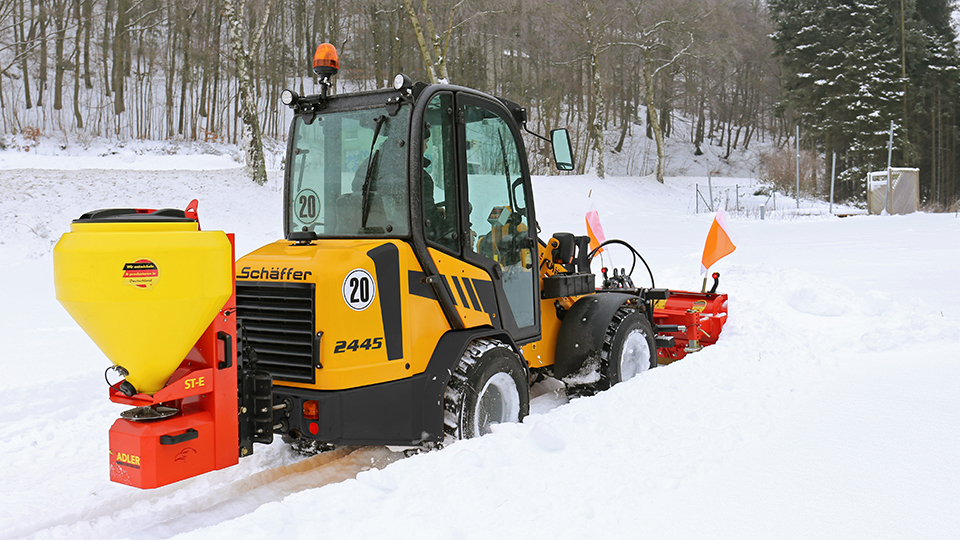
The most versatile machines are compatible with everything from grapples and forks to buckets, brooms, and specialty attachments—allowing you to handle diverse tasks throughout the year. Many tree care professionals extend their work into winter by performing snow removal, making multi-seasonal flexibility a valuable consideration. Most Schäffer models, for example, come standard with a universal quick-attach skid steer headstock that accommodates this wide range of attachments without requiring adapter plates. That matters because adapter plates add dead weight that directly reduces lifting capacity. This do-it-all flexibility strengthens your return on investment while simplifying your fleet management.
What Role Does Operator Comfort Play in Equipment Selection?
Your operators spend hours in the cab every day. Equipment that keeps them comfortable delivers several measurable benefits: higher productivity, better safety outcomes, and improved crew retention.
Comfort factors that impact performance:
- Visibility: Can operators see clearly in all directions, especially around crews and obstacles?
- Ergonomics: Are the controls intuitive and within easy reach?
- Ride quality: How much vibration reaches the operator?
- Access: Can operators enter and exit safely throughout the day?
Do more than just look at the equipment—if possible, sit in the operator’s seat. Check sightlines, reach for controls, and imagine spending 8–10 hours in that environment. Minor comfort differences add up to significant performance impacts over time.
How Important Is Service and Training Support?
The sale is just the beginning of your relationship with an equipment provider. The real value comes from ongoing support, training, and technical assistance.
Questions about post-purchase support:
- What operator training is included with a purchase?
- Do you offer ongoing technical support?
- How extensive is your service coverage in my area?
- How do you handle warranty claims?
- Can you provide references from tree care companies similar to mine?
The best equipment distributors view themselves as long-term partners in your success, not just vendors. They take time to understand your specific applications and recommend solutions that fit your actual needs—not just what they have in stock.
What Should You Know About Financing and Total Cost of Ownership?
Sticker price is only part of the equation when it comes to comparing your equipment options. Savvy buyers evaluate the total cost of ownership across the machine’s operational life.
Consider these cost factors:
- Fuel efficiency: How much will you spend on fuel annually?
- Maintenance requirements: What’s the maintenance schedule and typical costs?
- Resale value: Do these machines hold value in the used market?
- Financing options: What terms are available, and do they fit your cash flow?
- Insurance costs: Some equipment costs more to insure based on theft risk or repair costs.
Ask exhibitors for total cost of ownership projections, not just purchase prices. The cheapest machine upfront frequently costs substantially more over five years due to fuel consumption, service requirements, and operational interruptions.
Make the Most of Your TCI EXPO Visit
Trade shows like TCI EXPO offer a unique opportunity to compare multiple equipment options side-by-side, ask detailed questions, and build relationships with distributors who’ll support your business for years to come.
Come prepared with your typical job requirements, current fleet challenges, and specific questions about the factors that matter most to your operation. Take photos, collect spec sheets, and request detailed demonstrations without hesitation—including climbing aboard the equipment yourself.
Visit DFD Loaders at Booth #2029 to discover how Schäffer compact wheel loaders can help tree care professionals, like you, optimize their operations. Our team brings hands-on knowledge of what tree care professionals deal with every day—and we’re ready to have honest conversations about whether our equipment is the right fit for your specific needs.
We look forward to connecting with you in St. Louis